

Horizontal Blinds vs Vertical Blinds: Which Is Better for Your Windows?
Horizontal and vertical blinds operate differently and suit different window dimensions. This article outlines how each format manages light, window coverage, usability, cleaning needs, and wear. The comparison focuses on performance factors rather than preference, allowing a direct view of how slat direction influences installation suitability and long-term function.
Which window sizes are best suited to horizontal blinds?
Horizontal blinds align with common single-hung and double-hung window proportions because the slats lower from a headrail and distribute weight vertically. In regions such as horizontal blinds in Beaumont, standard openings often support horizontal operation without additional rail reinforcement. Shorter widths reduce slat deflection and allow lifting components to manage weight efficiently.
Horizontal assemblies depend on controlled stacking at the top of the window frame. When the opening is tall and narrow, lift cords handle the suspended weight with less strain. Multiple blinds may be required across wide spans because a single unit can experience bowing or cord fatigue when the slats exceed the recommended width.
Horizontal configurations are regularly applied to bedrooms, offices, and enclosed rooms where passage through the opening is not required. Stacked slats remain in a fixed overhead position and do not obstruct floor-level traffic.
When are vertical blinds more appropriate for wide openings?
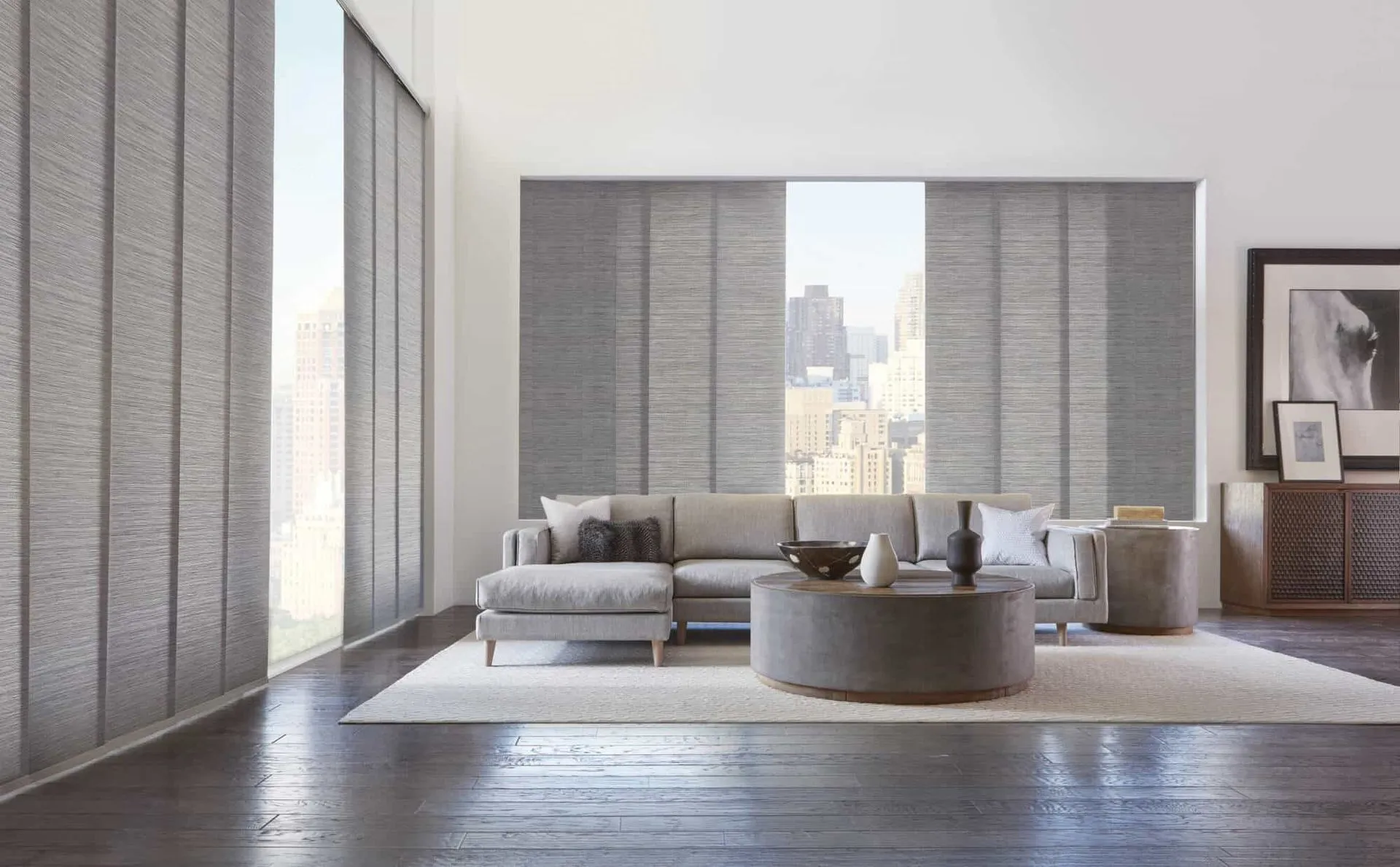
Vertical blinds support wide patio doors and broad glass panels because lateral stacking shifts weight across a track rather than through a lift system. Individual vanes pivot and move sideways, allowing the entire system to clear the access point without compressing multiple feet of slats into an overhead bundle.
Wide doors exert consistent downward pressure due to gravity. Vertical blinds transfer that load through individual hangers instead of cords. This arrangement reduces distortion across broad spans and maintains vane alignment during repeated adjustments.
Side stacking enables unobstructed entry and exit, which is necessary when the door functions as a passage point. Vertical systems also reduce friction against trim because the operating direction follows the opening width rather than height.
How do horizontal and vertical blinds differ in light control and privacy?
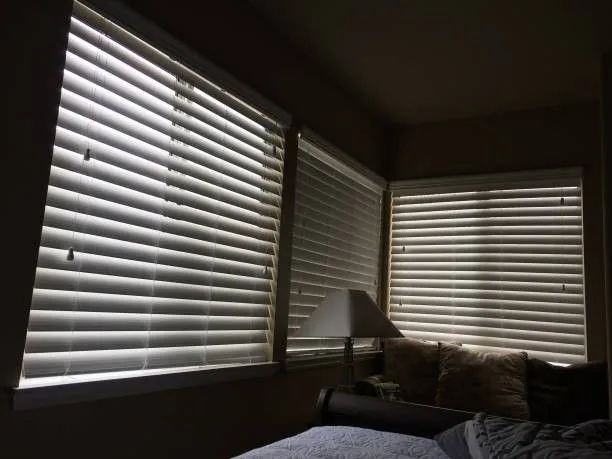
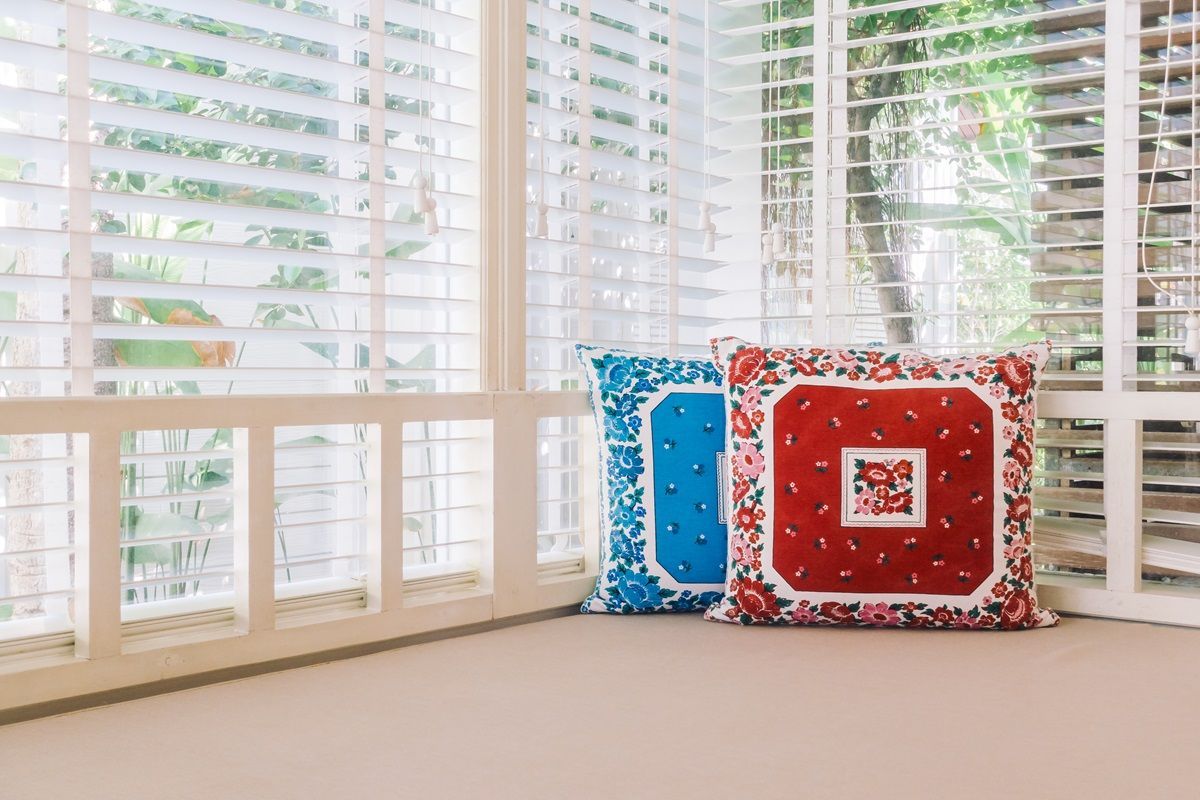
Horizontal blinds enable tight overlap across the width of the slats. When angled downward, line-of-sight reduction is precise because exterior viewing paths intersect blocked surfaces. Tilting in small increments allows small daylight adjustments without exposing full interior conditions.
Vertical blinds provide directional control but leave tolerance between vanes when partially opened. Light enters through these gaps depending on the vane curvature and outside positioning. Full closure improves uniformity, but minor spacing can still occur at the bottom when airflow moves the vanes.
Horizontal slats typically increase blackout potential when thickness, density, and alignment meet specifications. Vertical systems disperse daylight effectively but do not usually offer micro-blocking performance at the same level due to mechanical spacing.
What are the main differences in cleaning and surface maintenance?
Horizontal slats collect dust on the upward-facing surfaces. Cleaning generally requires individual slat contact because particulate settles on each panel. Prolonged exposure to moisture can cause curvature or edge distortion in certain materials.
Vertical blinds reduce dust layering because each vane hangs perpendicular to the floor. Individual replacements are possible when a vane experiences abrasion, scratching, or contamination. The wipe-down path is vertical, reducing particulate retention.
In high-ventilation zones, airborne debris settles more rapidly on flat horizontal planes than on vertical surfaces. This distinction affects maintenance intervals.
Which blind format manages airflow and heat transfer more effectively?
Horizontal slats reduce air passage when fully closed because the overlap restricts direct convection across the window surface. Some heat gain reduction is possible by preventing direct radiation onto interior surfaces, although blinds function as a secondary barrier rather than an insulation system.
Vertical blinds allow more airflow when vanes are angled because air travels through increased spacing. This supports circulation when the opening is used frequently for ventilation. The trade-off is reduced limitation on thermal exchange.
Thermal performance varies according to slat coating, material density, spacing tolerance, and installation accuracy. No blind orientation substitutes for glazing-rated insulation.
How do durability expectations differ between horizontal and vertical systems?
Horizontal blinds rely on lift cords, tilt drums, and mechanical housings. Over time, cord fatigue may occur if the system supports heavy slats across long widths. Frequent lifting increases friction, especially in assemblies where multiple blinds are joined for broad spans.
Vertical blinds utilize carriers suspended from a track. Vanes pivot and slide with less vertical strain because lifting forces are absent. Component wear occurs at carrier wheels and pivot joints rather than cords.
Durability is determined by vane or slat composition, ultraviolet exposure, installation precision, and repetitive motion. Composite and polymer surfaces tolerate moisture variation more consistently than untreated natural materials.
How do usage patterns influence selection?
Horizontal blinds operate best on fixed windows where movement is limited to tilting rather than full retraction. Smaller repeated adjustments do not create traffic interference because slats lift vertically into the headrail.
Vertical blinds function effectively in areas requiring lateral movement, such as door-mounted glass. Positioning supports a clear passage without interference at floor level. This format suits zones where adjustments occur multiple times throughout the day as individuals enter or leave the space.
Where furniture, walkway clearance, or door handles occupy space near the glazing, vertical vanes prevent entanglement because motion is lateral rather than upward.
How should environmental exposure influence material selection?
Ultraviolet levels affect slat rigidity and color retention over time. Horizontal slats facing direct sunlight may require coated surfaces to limit fading and warping. Track-based vertical systems may need reinforced hangers to prevent carrier fatigue under heat exposure.
Moisture sources such as kitchen steam or bathroom humidity can influence performance. Horizontal wooden slats may expand when exposed to high humidity cycles, while vinyl or composite formats reduce that reaction. Vertical vanes made of PVC or fabric perform differently depending on permeability and cleaning expectations.
Material ratings should align with expected temperature variation and humidity concentration rather than slat orientation alone.
How does location-specific usage differ across markets?
Installation patterns differ by region. Climate variation, glazing size, and building design influence which blind orientation functions consistently. In locations where large patio doors extend across main living areas, vertical blinds appear more frequently due to lateral movement requirements.
Regions with standardized bedroom and office window openings encounter horizontal assemblies more often. Durability requirements shift when heat exposure persists through the year and when ultraviolet intensity is high. In areas such as horizontal blinds in Lake Elsinore, climate patterns involving high-heat cycles and sun exposure require slat composition that remains stable under frequent tilt adjustments.
Local building layouts also determine which configuration integrates best with trim depth and mounting clearance.
Frequently Asked Questions
Do vertical blinds function properly on narrow frames?
They can operate, but vane width may exceed the visual scale of the window, producing disproportionate stacking.
Do horizontal blinds achieve full blackout?
They block light more precisely than vertical vanes, but a complete blackout depends on slat overlap depth and side clearance.
Can either type mount inside or outside the frame?
Both allow interior or exterior placement when trim depth and clearance meet manufacturer tolerances.
Key Takeaway
- Match slat direction to window width, traffic requirements, and opening size.
- Horizontal formats support precise privacy through controlled tilt.
- Vertical assemblies manage wide spans without stressing lift components.
A Final Thought
Orientation affects usability, maintenance frequency, viewing control, and component wear. Selecting a format based on structural fit and operating patterns produces more predictable outcomes than relying on generalized preference. The most appropriate choice is determined by the window scale and the operational demands placed on the covering.